Phosphorus is essential for growth, skeletal development, egg production, metabolism, and feed efficiency. It is also one of the most scrutinized minerals in commercial animal production because unused phosphorus leaves the animal and contributes to nutrient loading in manure, litter, runoff, ponds, and land-application systems.
In plant-based feed materials, much of the phosphorus is locked inside phytate. Poultry, swine, and many aquaculture species do not efficiently access this bound phosphorus without enzymatic support. Phytase (myo-inositol hexakisphosphate phosphohydrolase) helps release phosphorus from phytate during digestion, making a larger share of the phosphorus already present in raw materials nutritionally useful.
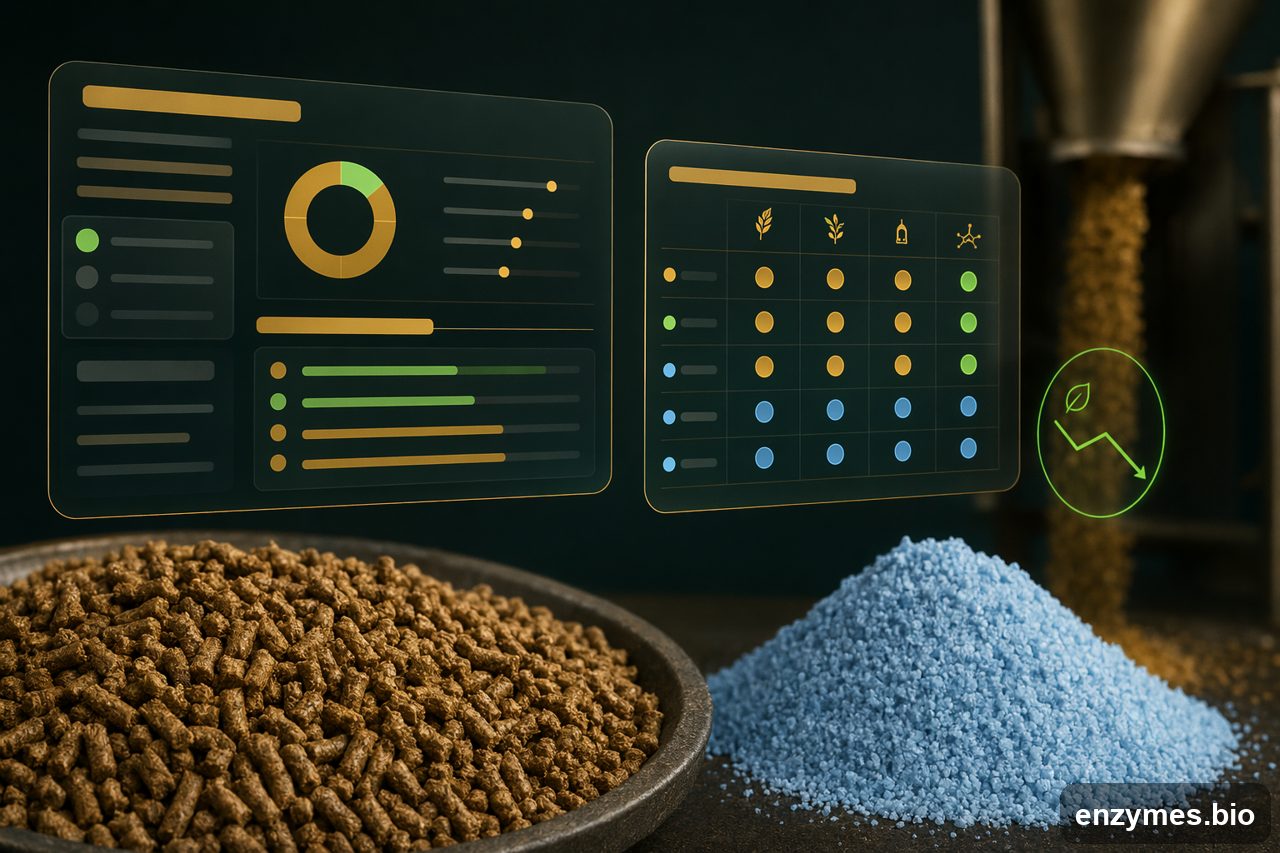
We supply phytase in bulk to feed mills, premix makers, integrators and distributors working on phosphate cost and phosphorus discharge. For them it is a purchasing, formulation and compliance question as much as a nutrition one.
Wholesale and bulk supply for feed manufacturers and resellers. Request a quote with the product, the quantity and the delivery country. Prices and lead times are quoted per order.
What phytase changes in a phosphorus program
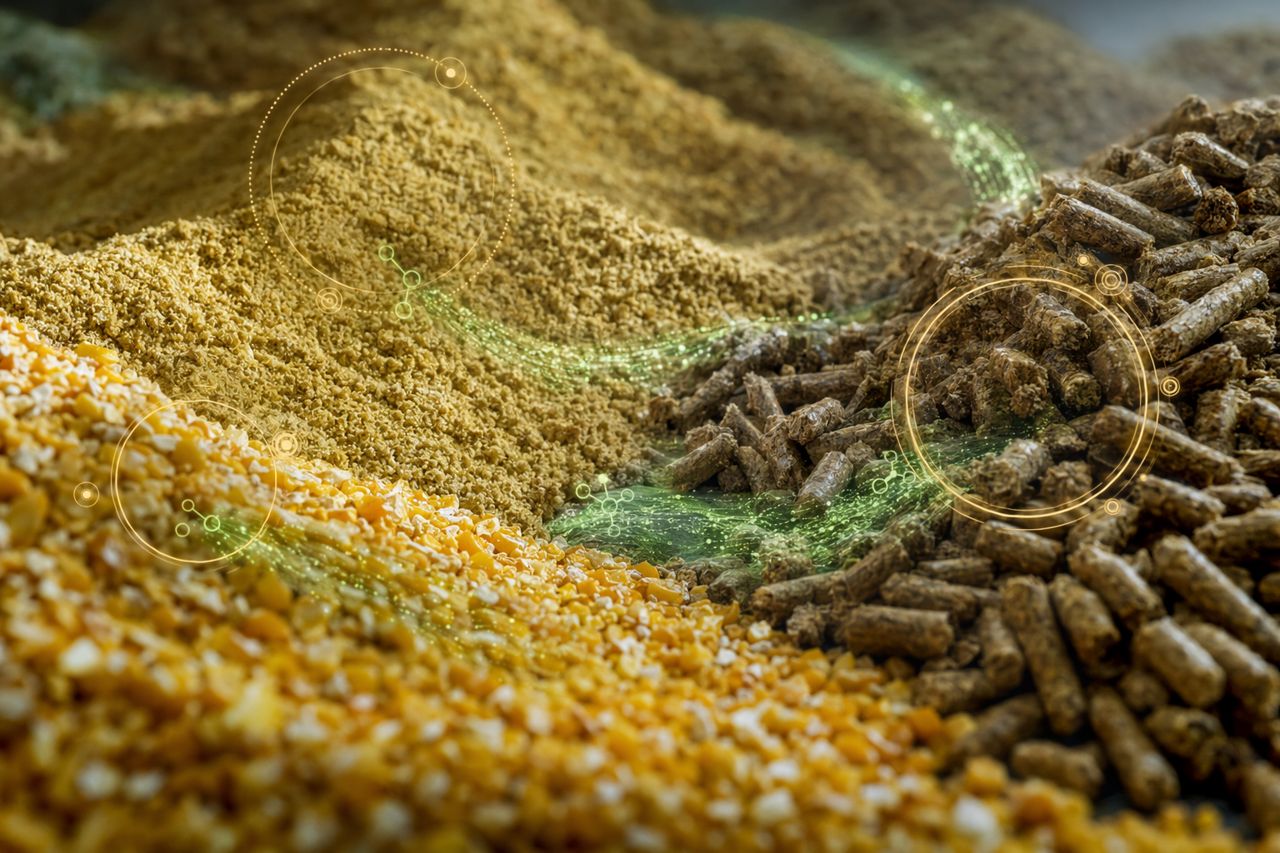
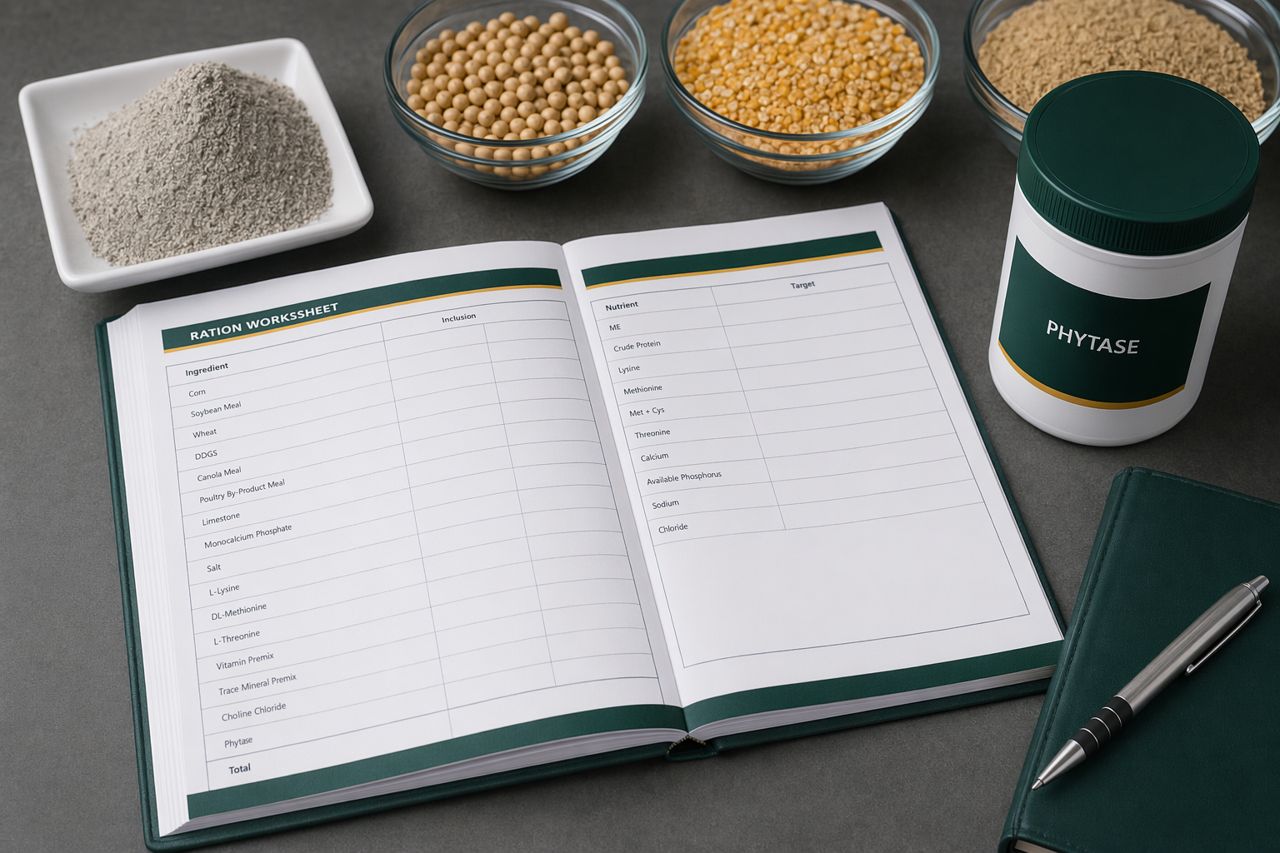
A phytase strategy can help nutritionists and formulators shift part of the phosphorus contribution away from inorganic phosphate sources and toward phosphorus released from plant ingredients such as corn, soybean meal, wheat, canola meal, rice bran, and other botanical inputs.
When applied correctly, phytase may support:
- Better utilization of plant-bound phosphorus
- Reduced reliance on inorganic phosphate sources
- More precise available phosphorus formulation
- Lower phosphorus excretion pressure
- Improved alignment with nutrient-management plans
- Greater flexibility when phosphate costs or availability change
- A clearer sustainability story backed by feed formulation decisions
The commercial value depends on diet composition, species, life stage, ingredient variability, feed processing conditions, and the nutritional matrix selected by the technical team.
Why phytate matters
Phytate is the primary storage form of phosphorus in many seeds and grains. In the digestive tract, phytate can bind minerals and interact with protein and starch fractions. Without sufficient phytase support, a meaningful portion of this phosphorus can pass through the animal unused.
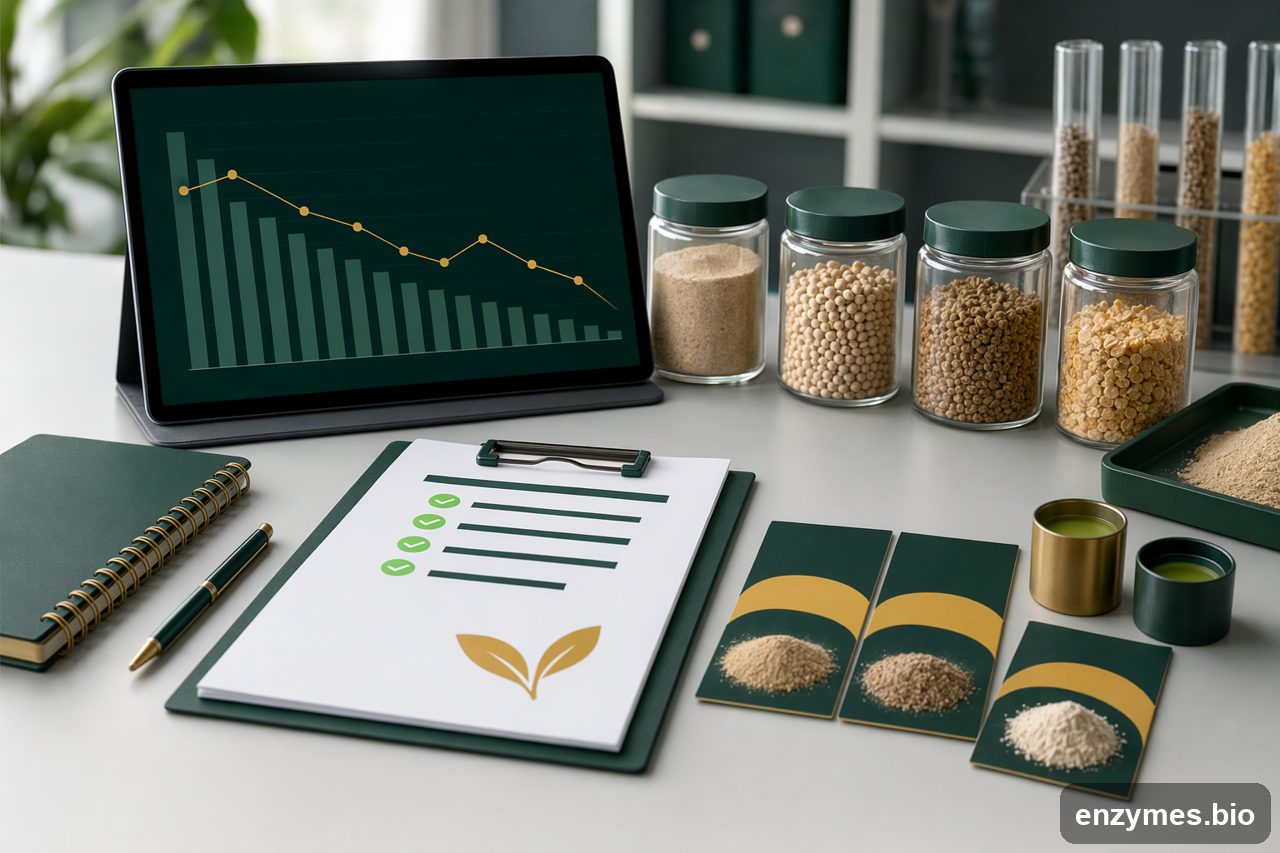
Phytase targets the phytate molecule and helps release phosphate groups stepwise. This improves the nutritional availability of phosphorus already present in the feed. Depending on the formulation strategy, nutritionists may also account for associated effects on calcium balance, trace minerals, amino acid utilization, and energy contribution, but phosphorus management remains the central application.
Formulation value: beyond ingredient replacement
Inorganic phosphate is often one of the higher-cost mineral inputs in a ration. Its price and availability can fluctuate with global supply, freight, regional demand, and local sourcing constraints. Phytase gives formulation teams another lever.
A well-defined phytase program can help procurement and nutrition teams evaluate:
- How much inorganic phosphate can be reduced while maintaining mineral nutrition targets
- Whether different raw material baskets require different matrix assumptions
- How calcium-to-phosphorus balance should be managed when phytase is introduced or changed
- Whether feed processing conditions require a more robust product form
- How safety margins should be set for young animals, breeder programs, or high-performance diets
- How phosphorus reduction supports customer sustainability claims or regulatory expectations
This is where phytase selection becomes a technical-commercial decision. The lowest-cost enzyme line item is not always the lowest-cost phosphorus strategy.
Environmental nutrient-load management
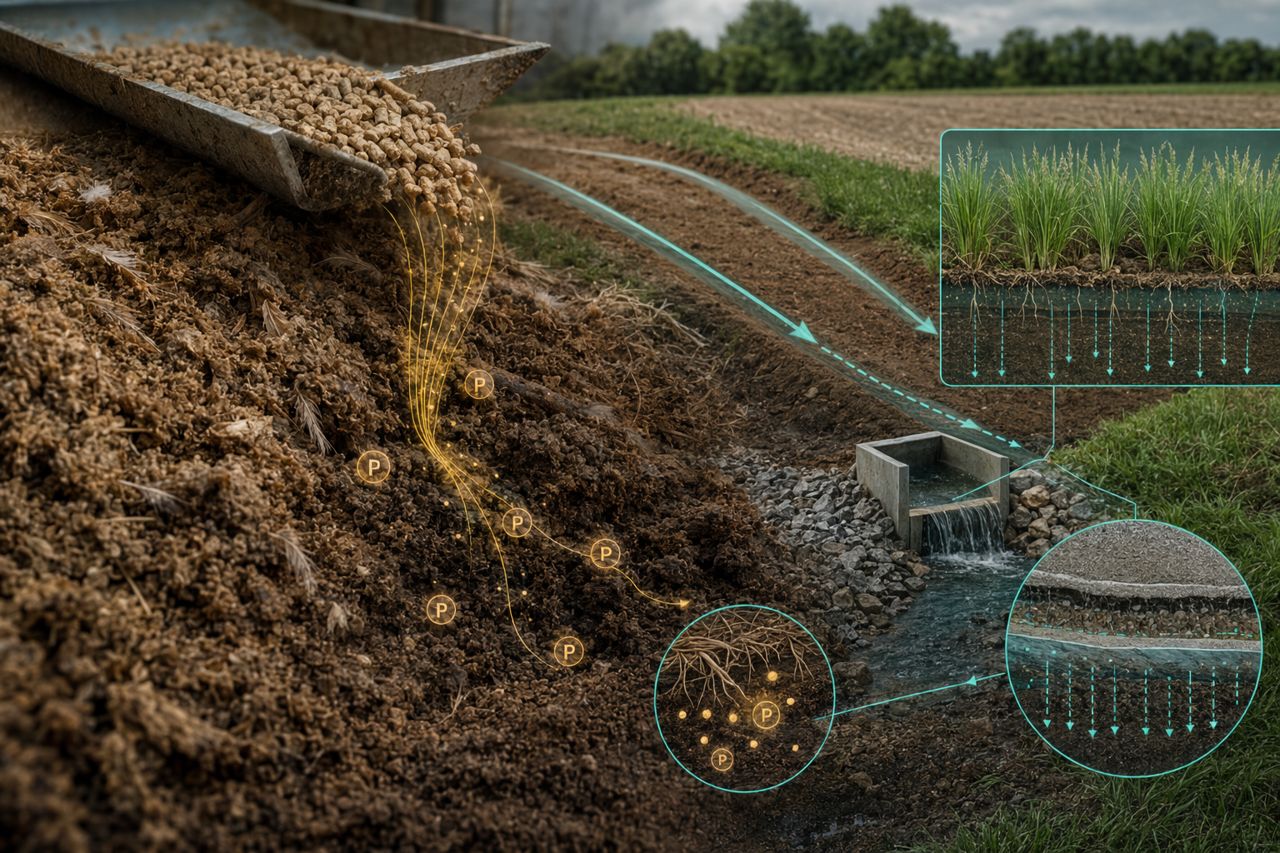
Phosphorus leaving the animal is part of a broader nutrient-management system. In poultry litter, swine manure, aquaculture effluent, and land-applied organic fertilizers, excess phosphorus can increase the risk of nutrient accumulation and runoff.
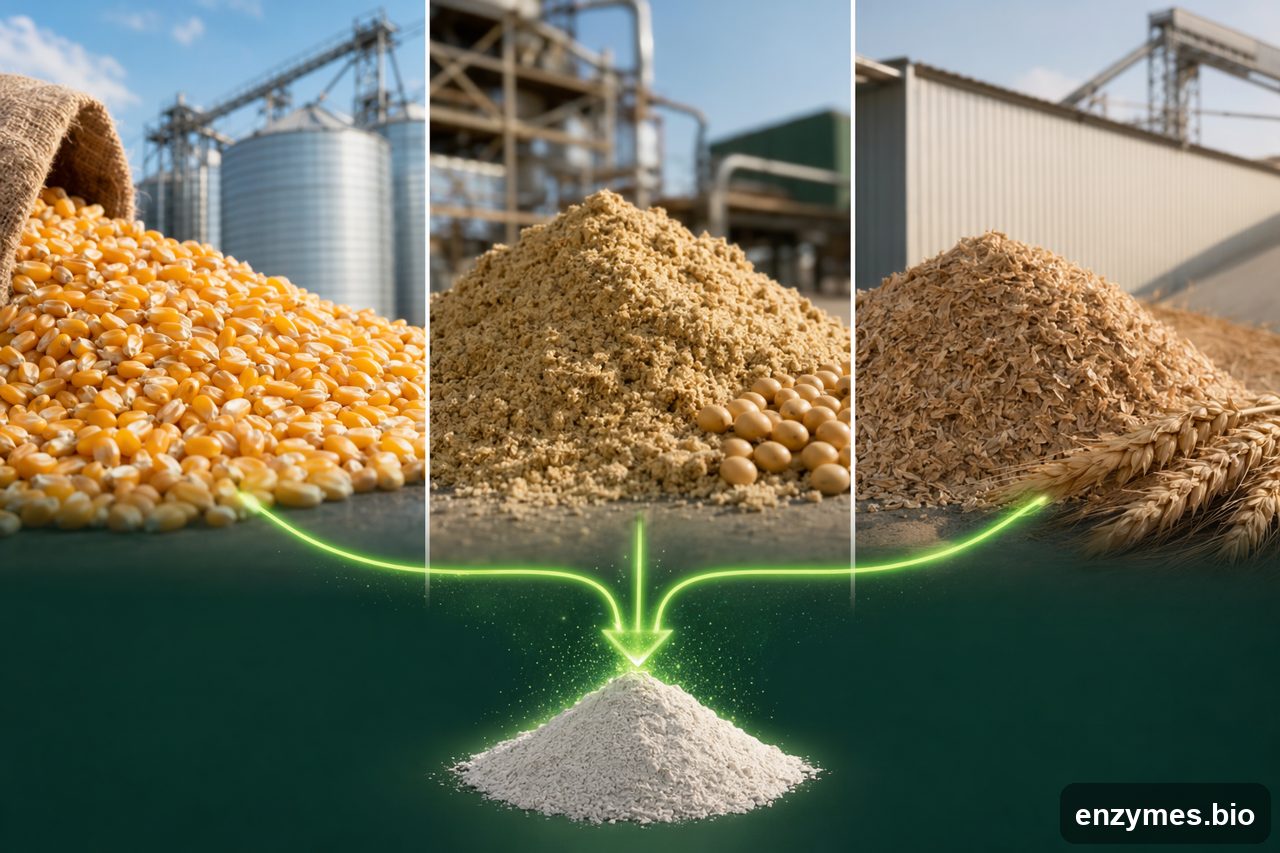
By releasing more phosphorus inside the animal, phytase can reduce the amount of undigested phosphorus entering waste streams. This can support farms, integrators, and feed companies working under:
- Manure nutrient-management plans
- Watershed protection programs
- Land-application limits
- Aquaculture discharge controls
- Sustainability reporting requirements
- Customer or retailer environmental standards
The outcome should be evaluated at the system level. Feed formulation is upstream, but its effects are visible downstream in nutrient balance, phosphate procurement, and waste-management pressure.
Species and production-system considerations
Poultry
Broilers, layers, breeders, and turkeys commonly use phytase as part of available phosphorus formulation. The key is matching the phytase matrix to bird age, calcium level, feed form, pelleting exposure, and performance targets. In layer and breeder diets, mineral balance must be handled carefully because eggshell, skeletal reserves, and long-cycle production goals are closely linked.
Swine
Nursery, grow-finish, and sow diets can benefit from improved plant phosphorus release, especially where corn-soy or wheat-based formulations dominate. Young pigs may require more conservative mineral safety margins, while grow-finish programs often focus on phosphate cost control and manure nutrient loading.
Aquaculture
Plant proteins are increasingly important in many aquafeed systems. Phytase can help improve phosphorus availability from botanical ingredients and may reduce phosphorus discharge pressure in ponds, raceways, or recirculating systems. Product form, processing exposure, and water stability considerations should be reviewed with the broader feed technology program.
Selection criteria for a phytase supplier
For phosphorus management, phytase should be evaluated as a formulation input with operational consequences. Procurement teams and technical directors should compare more than price per kilogram.
Important decision points include:
- Product form: dry, granular, coated, or liquid formats depending on mill setup
- Processing fit: suitability for mash, pelleted, crumbled, or post-application systems
- Premix compatibility: handling with minerals, acids, carriers, and other additives
- Formulation support: clear matrix guidance appropriate to the diet and species
- Storage and logistics: shelf-life expectations, packaging, and warehouse conditions
- Batch consistency: dependable commercial production and documentation
- Regulatory fit: alignment with the destination market and customer requirements
- Technical responsiveness: ability to support changes in raw materials, phosphate pricing, or sustainability targets
Practical implementation checklist
Before changing a phosphorus program, align nutrition, procurement, quality, and production teams around the following:
- Define the current inorganic phosphate source, cost, and inclusion logic.
- Map the main plant ingredients and their expected phytate contribution.
- Review species, age, and production-stage risk tolerance.
- Confirm calcium strategy and mineral balance.
- Assess pelleting, conditioning, liquid application, or premix handling constraints.
- Select a phytase product form that fits the mill process.
- Choose a nutritional matrix and document how it is applied in formulation software.
- Monitor performance, bone or mineral indicators where relevant, and waste-stream phosphorus trends.
- Revisit the strategy when raw material baskets or phosphate markets change.
Phytase Enzyme Solutions perspective
Phytase Enzyme Solutions positions phytase as a practical nutrient-release tool for feed businesses that need measurable formulation value and credible environmental outcomes. The objective is not to add another additive to the ration. The objective is to convert unavailable phosphorus into usable nutrition, reduce avoidable phosphate dependency, and support a cleaner nutrient balance across the production chain.
If your team is reviewing phosphate cost, phosphorus discharge pressure, sustainability targets, or a reformulation project, Phytase Enzyme Solutions can help evaluate phytase options against your diet context.
Request a quote or get pricing
Working on a phosphate cut or a discharge target? Send:
- the species and the main diets
- the inorganic phosphate source you use today and the cut you want
- mash, pellet or post-pellet application
- the quantity per order or per month, and the delivery country
Prices, quantities and lead times are quoted per order. Request a quote.